
CHINESE JOURNAL OF PARASITOLOGY AND PARASITIC DISEASES ›› 2026, Vol. 44 ›› Issue (4): 587-594.doi: 10.12140/j.issn.1000-7423.2026.04.019
• REVIEWS • Previous Articles Next Articles
WANG Weisi1( )(
 ), CHEN Ying1, SUN Yang2, HUANG Shuijin2, LUO Yanping3, KE Shaoyong4, DUAN Liping1,*()
Received:2026-03-02
Revised:2026-06-01
Online:2026-08-30
Published:2026-08-26
Contact:
* E-mail: duanlp@nipd.chinacdc.cnSupported by:CLC Number:
WANG Weisi, CHEN Ying, SUN Yang, HUANG Shuijin, LUO Yanping, KE Shaoyong, DUAN Liping. Advances in molluscicides against major snail intermediate hosts of Angiostrongylus cantonensis[J]. CHINESE JOURNAL OF PARASITOLOGY AND PARASITIC DISEASES, 2026, 44(4): 587-594.
Add to citation manager EndNote|Ris|BibTeX
URL: https://www.jsczz.cn/EN/10.12140/j.issn.1000-7423.2026.04.019
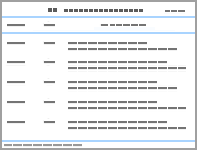
| 杀螺剂 | 杀螺活性a | 鱼毒性 | 主要作用靶点 | 参考文献 |
|---|---|---|---|---|
| 吡螺脲 | 48 h LC50 = 0.39 mg/L | 斑马鱼:96 h LC50 = 11.96 mg/L | 6-磷酸果糖激酶 | [ |
| 氟吡啶苯基脲类 | LC50 = 1.0 mg/L | 鲤鱼和草鱼:10 mg/L,72 h死亡率0 | 6-磷酸果糖激酶 | [ |
| 二苯基脲类 | 5 mg/L,螺死亡率100% | 鲤鱼苗:20 mg/L,72 h死亡率16.7% | 6-磷酸果糖激酶 | [ |
| 甲苯达唑 | LC50 = 0.307 mg/L | 斑马鱼:96 h LC50 = 5.398 mg/L | β-微管蛋白 | [ |
| 丁醚脲 | LC50 = 0.13 mg/L | 斑马鱼:96 h LC50 = 0.19 mg/L | ATP合成酶 | [ |
| 溴虫腈 | LC50 = 0.04 mg/L | 斑马鱼:96 h LC50 = 0.015 mg/L | 线粒体氧化磷酸化解偶联 | [ |
| 巴氯芬 | LC50 = 16.2 mg/L | / | 小根蛋白 | [ |
| 硫代烟酰胺腺嘌呤二核苷酸 | LC50 = 57.7 mg/L | / | 神经Wiskott-Aldrich综合征蛋白异构体X1 | [ |
| 植物种属 | 杀螺活性成分 | 靶标螺类 | 杀螺活性a | 主要作用靶点 | 参考文献 |
|---|---|---|---|---|---|
| 苦葛 | 苦葛皂苷A | 小管福寿螺 | LC50 = 3.89 mg/L | Advillin | [ |
| 槟榔 | 槟榔碱 | 小管福寿螺 | LC50 = 1.05 mg/L | 小根蛋白 | [ |
| 雷公藤 | 雷公藤甲素 | 小管福寿螺 | LC50 = 0.09 mg/L | β-微管蛋白 | [ |
| 大叶紫珠 | (E)-β-石竹烯 | 小管福寿螺 | 24 h LC50 = 16.67 mg/L | 尚待研究 | [ |
| β-蒎烯 | 小管福寿螺 | 24 h LC50 = 6.91 mg/L | 尚待研究 | [ | |
| 豚草 | Psilostachyin | 小管福寿螺 | 24 h LC50 = 15.9 mg/L | 尚待研究 | [ |
| Psilostachyin B | 小管福寿螺 | 24 h LC50 = 27.0 mg/L | 尚待研究 | [ | |
| 木荷 | Maetenoside B | 小管福寿螺 | 20 mg/L,螺死亡率100% | 尚待研究 | [ |
| 油茶皂苷Ⅲ | 小管福寿螺 | 20 mg/L,螺死亡率100% | 尚待研究 | [ | |
| 补骨脂 | 补骨脂甲素 | 小管福寿螺 | LC50 = 30.91 mg/L | 尚待研究 | [ |
| 唇形科植物 | 百里酚 | 褐云玛瑙螺 | 成螺:24 h LC50 = 3 000 mg/L | 尚待研究 | [ |
| 幼螺:24 h LC50 = 50 mg/L |
| 防控策略 | 杀螺效率 | 起效速度 | 非靶标生物安全性 | 环境风险 | 生产成本 | 适用场景 |
|---|---|---|---|---|---|---|
| 化学杀螺剂 | ★★★★☆ 高(LC50多在0.01-1 mg/L级) | ★★★★☆ 快(几小时至数天) | ★★☆☆☆ 传统品种高风险,新型产品显著降低 | ★★★☆☆ 较高,传统品种残留高,新型产品逐步改善 | ★★★☆☆ 中等,规模化生产成熟 | 暴发期应急响应种群压制、大面积农田/水域 |
| 植物源杀螺剂 | ★★★☆☆ 中等至高 | ★★★☆☆ 中等(数天) | ★★★☆☆ 总体中等,部分对鱼类有毒 | ★★☆☆☆ 较低,易降解,残留低 | ★★★☆☆ 总体中等,植物提取物原料易得、成本可控,活性单体提取/合成成本较高 | 生态敏感区、日常防控、有机农业 |
| 微生物源杀螺剂 | ★★★☆☆ 中等(对幼螺/卵效果好) | ★☆☆☆☆ 慢(数天至数周) | ★★★★☆ 特异性较强,引入风险需评估 | ★☆☆☆☆ 低,自然归趋 | ★★★★☆ 较高(生产、储存、施用要求高) | 长期治理、配合其他措施 |
| RNA杀螺剂 | ★★★★☆ 潜力高 | ★★★☆☆ 中等(需基因沉默时间) | ★★★★★ 极低,高序列特异性对非靶标影响较小 | ★☆☆☆☆ 低,dsRNA自然降解,纳米载体包裹后有可能延长半衰期 | ★★★★★ 高(规模化合成待突破) | 精准防控、局部施药、抗药性治理 |
| 引诱剂 | ★☆☆☆☆ 不直接杀灭,依赖配套措施 | ★★★★★ 极快(几分钟至几小时) | ★★★☆☆ 食物引诱剂特异性较低,性引诱剂专一 | ★☆☆☆☆ 低,生物相容性高 | ★★☆☆☆ 总体较低,食物引诱剂来源广泛,性引诱剂结构复杂但用量较低 | 监测、诱杀、交配干扰、集中处理 |
|
| [1] | HE Anqi, TIAN Xia, LV Shan. Epidemiology and control of angiostrongyliasis in China during the recent 20 years [J]. CHINESE JOURNAL OF PARASITOLOGY AND PARASITIC DISEASES, 2026, 44(4): 461-467. |
| [2] | HAN Qingchi, YANG Limin, ZHU Zelin, ZHANG Yi, CHEN Junhu, GUO Yunhai, LV Shan. National syndromic surveillance of angiostrongyliasis in China from 2009 to 2025 [J]. CHINESE JOURNAL OF PARASITOLOGY AND PARASITIC DISEASES, 2026, 44(4): 477-483. |
| [3] | WEI Hang, LIAO Liang, XING Mengdan, LUO Jingtong, SHI Yue, LI Sinuo, LÜ Zhiyue. Blood-brain barrier disruption in rats infected with Angiostrongylus cantonensis [J]. CHINESE JOURNAL OF PARASITOLOGY AND PARASITIC DISEASES, 2026, 44(4): 484-492. |
| [4] | WANG Kun, CHEN Shenbo, SHEN Haimo, GUO Yunhai, HONG Yang, WU Xiaonen, GAO Mingfei, CHEN Junhu. Genetic differentiation between sexes of and development of a sex identification method for Angiostrongylus cantonensis based on whole-genome sequencing [J]. CHINESE JOURNAL OF PARASITOLOGY AND PARASITIC DISEASES, 2026, 44(4): 493-499. |
| [5] | LI Tianmei, JIANG Yingrui, FANG Wen, LI Ting, ZHAO Shenhua, REN Jianhui. Dynamic distribution and DNA load of Angiostrongylus cantonensis in rats [J]. CHINESE JOURNAL OF PARASITOLOGY AND PARASITIC DISEASES, 2026, 44(4): 500-504. |
| [6] | CHEN Yunhong, XIE Xianliang, CHEN Baojian, LIN Yaoying, YU Wenwu, XIE Hanguo. Prevalence of Angiostrongylus cantonensis infection in and phylogenetic analysis of Pomacea from Fujian Province [J]. CHINESE JOURNAL OF PARASITOLOGY AND PARASITIC DISEASES, 2026, 44(4): 505-511. |
| [7] | MAO Qi, YU Qing, LV Xihong, SUN Zhongxing, JIN Yanjun. Spatiotemporal distribution of Pomacea snails in China based on GBIF data and its association with genetic tracing [J]. CHINESE JOURNAL OF PARASITOLOGY AND PARASITIC DISEASES, 2026, 44(4): 512-516. |
| [8] | LIU Xiadie, YIN Jiaxiang. Host infection spectrum and comprehensive control of Angiostrongylus cantonensis under the framework of One Health [J]. CHINESE JOURNAL OF PARASITOLOGY AND PARASITIC DISEASES, 2026, 44(4): 572-578. |
| [9] | ZHU Zelin, GUO Yunhai, Qin Zhiqiang, HAO Yuwan, TIAN Tian, CHEN Yijun, XIA Shang, CHEN Muxin, LI Shizhu, ZHOU Xiaonong. Advances in the epidemiological studies of angiostrongyliasis in China: ecological models [J]. CHINESE JOURNAL OF PARASITOLOGY AND PARASITIC DISEASES, 2026, 44(4): 579-586. |
| [10] | LI Chunyuan, JIN Yanjun, YANG Jiawei, CHENG Gang, HUANG Jiayin, WANG Shuang, YU Qing. Investigation on potential risk factors for angiostrongyliasis transmission across Chongming District, Shanghai Municipality [J]. CHINESE JOURNAL OF PARASITOLOGY AND PARASITIC DISEASES, 2026, 44(4): 615-618. |
| [11] | LI Qingyu, JIN Yong, MA Weiqiong, HUANG Zhiyong. A case of central nervous system and pulmonary infection caused by Angiostrongylus cantonensis [J]. CHINESE JOURNAL OF PARASITOLOGY AND PARASITIC DISEASES, 2025, 43(2): 307-310. |
| [12] | JIANG Ling, ZHAO Yongbo, LI Tianmei. Species identification of the invasive Pomacea sp. in China [J]. CHINESE JOURNAL OF PARASITOLOGY AND PARASITIC DISEASES, 2024, 42(3): 384-388. |
| [13] | CHENG Donghui, JIANG Tiange, JING Yidan, YANG Limin, GUO Yunhai, FANG Yuan, LI Zhongqiu, ZHANG Yi. Transcriptome analysis of brain tissue in rat infected with Angiostrongylus cantonensis [J]. CHINESE JOURNAL OF PARASITOLOGY AND PARASITIC DISEASES, 2024, 42(2): 217-224. |
| [14] | GAO Lanlin, XIE Hanguo, LIN Chenxin, JIANG Dianwei, CAI Wuwei, ZHENG Dan. Phylogenetic analysis of Angiostrongylus cantonensis from Achatina fulica based on COⅠ sequence [J]. CHINESE JOURNAL OF PARASITOLOGY AND PARASITIC DISEASES, 2023, 41(6): 756-759. |
| [15] | HUANG Mengyu, CHEN Dikun, CHEN Huiru, FAN Mengpei, LIU Junyou, QUAN Yunfan. Investigation on Angiostrongylus cantonensis infection in Achatina fulica in Haikou wetland park [J]. CHINESE JOURNAL OF PARASITOLOGY AND PARASITIC DISEASES, 2023, 41(5): 640-643. |
| Viewed | ||||||
|
Full text |
|
|||||
|
Abstract |
|
|||||
