中国寄生虫学与寄生虫病杂志 ›› 2026, Vol. 44 ›› Issue (2): 222-228.doi: 10.12140/j.issn.1000-7423.2026.02.011

• 论著 • 上一篇    下一篇

烯醇酶1调控刚地弓形虫速殖子生物学功能及速殖子与缓殖子转化的研究

朱弟()(), 吴蔚玲, 孔德豪, 周志豪, 彭鸿娟*()()   

  1. 南方医科大学公共卫生学院病原生物学系广东省热带病研究重点实验室,华南传染病防治教育部重点实验室(南方医科大学)广东广州 510515
  • 收稿日期:2026-01-19 修回日期:2026-03-21 出版日期:2026-04-30 发布日期:2026-04-29
  • 通讯作者: * 彭鸿娟(ORCID:0000-0002-9345-8218),女,博士,教授,从事病原-宿主相互关系和新发传染病防控研究。E-mail:hongjuan@smu.edu.cn
  • 作者简介:朱弟(ORCID:0009-0001-3517-5586),男,硕士研究生,从事弓形虫速缓殖子转化研究。E-mail:1069438361@qq.com
    作者贡献

    朱弟负责实验操作和论文撰写,吴蔚玲、孔德豪、周志豪参与实验操作,彭鸿娟、吴蔚玲负责论文设计和审校。

  • 基金资助:
    国家自然科学基金重点项目(82330072);国家自然科学基金面上项目(82272364);广东省自然科学基金(2023A1515011733);广东省自然科学基金(2024A1515011327)

Biological functions of enolase 1 in modulation of Toxoplasma gondii tachyzoite behaviors and tachyzoite-bradyzoite transition

ZHU Di()(), WU Weiling, KONG Dehao, ZHOU Zhihao, PENG Hongjuan*()()   

  1. Department of Pathogen Biology, School of Public Health, Southern Medical University; Guangdong Provincial Key Laboratory of Tropical Diseases Research; Key Laboratory of Infectious Diseases Research in South China (Southern Medical University), Ministry of Education, Guangzhou 510515, Guangdong, China
  • Received:2026-01-19 Revised:2026-03-21 Online:2026-04-30 Published:2026-04-29
  • Supported by:
    Key Program of National Natural Science Foundation of China(82330072);General Program of the National Natural Science Foundation of China(82272364);Natural Science Foundation of Guangdong Province(2023A1515011733);Natural Science Foundation of Guangdong Province(2024A1515011327)

摘要:

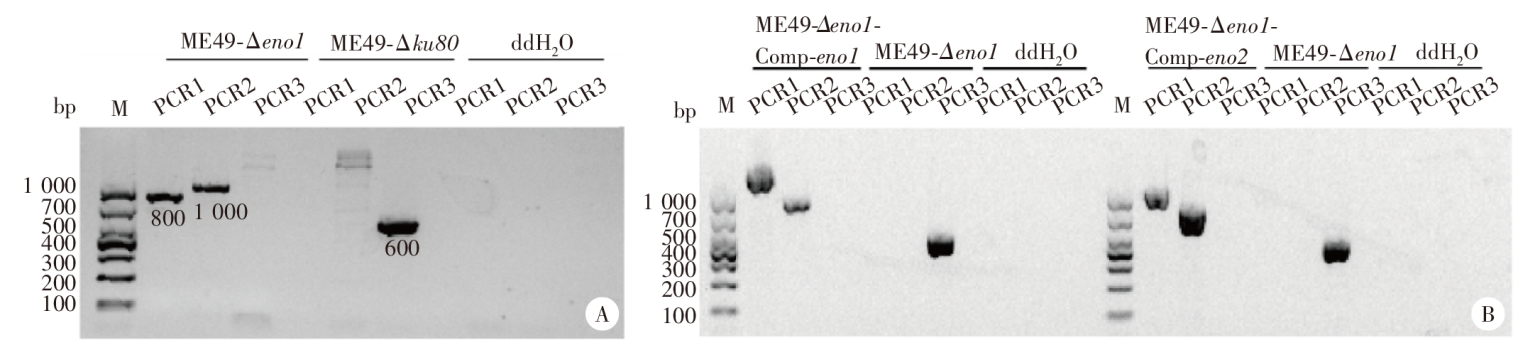
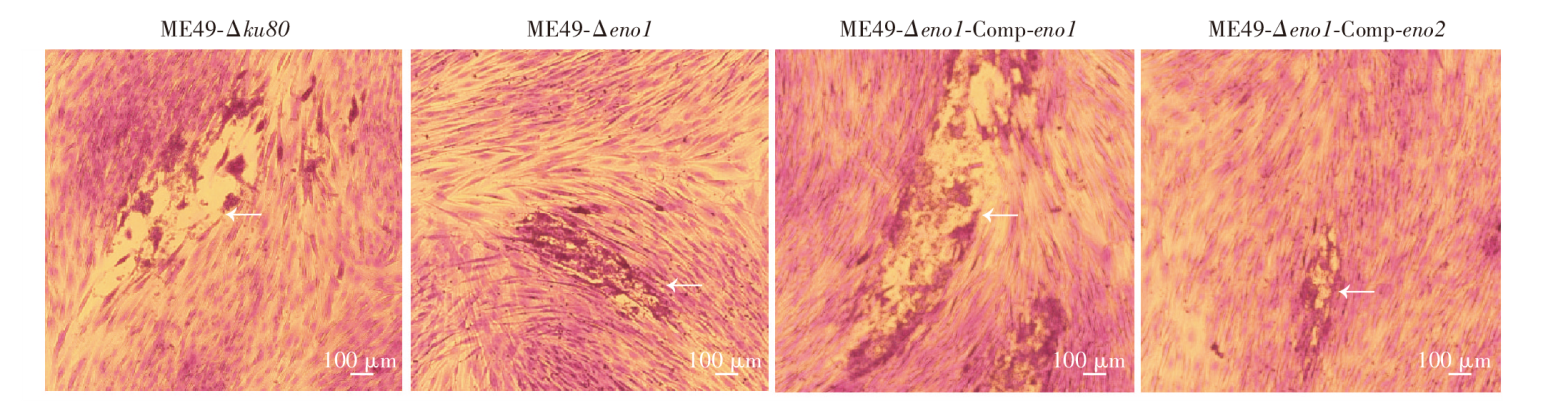
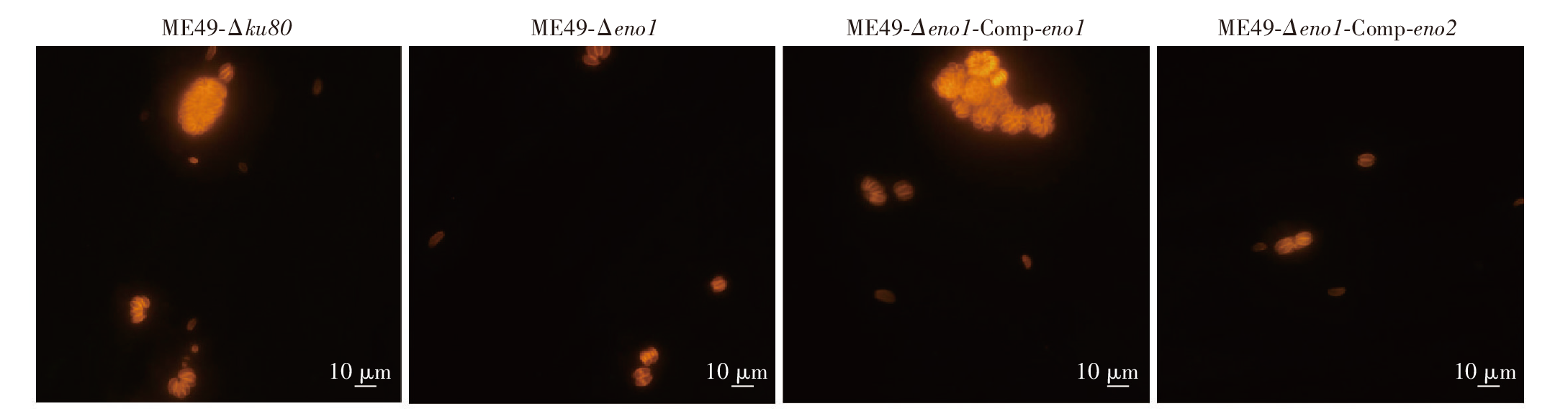
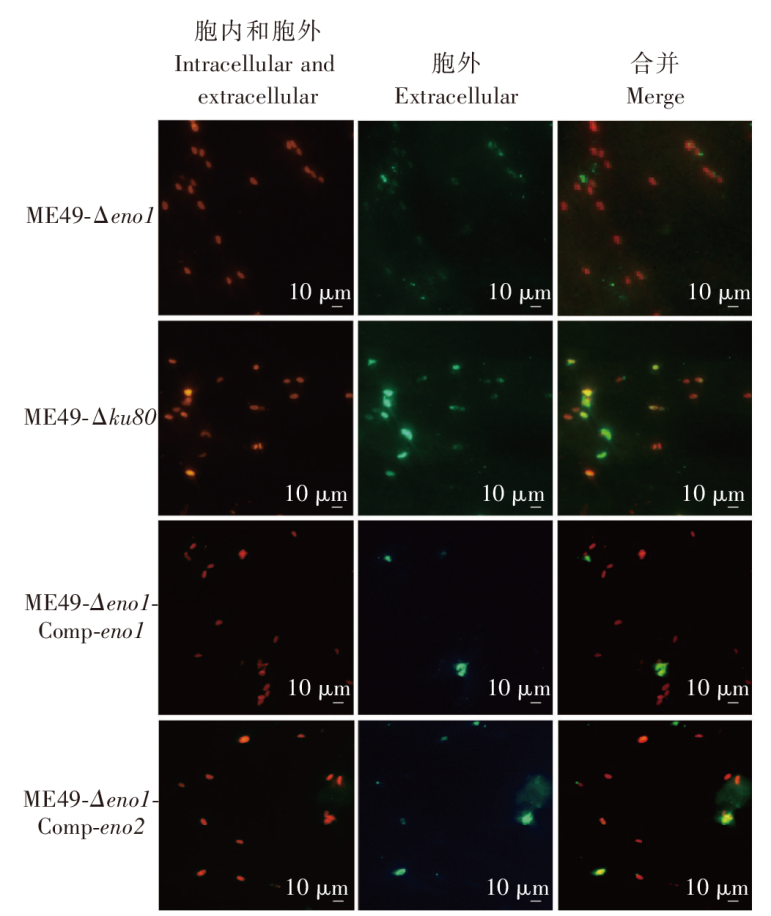
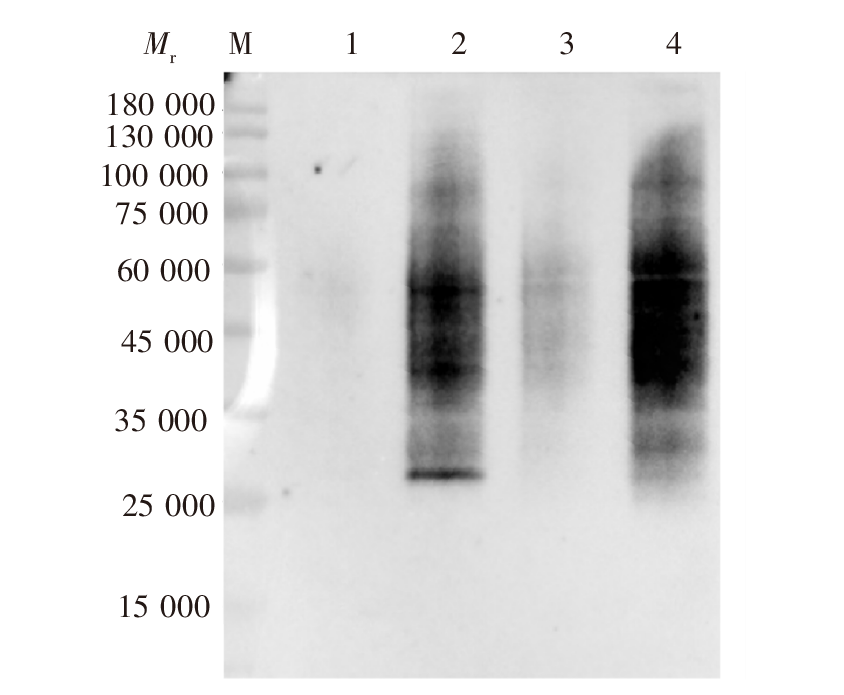
目的 探讨刚地弓形虫缓殖子阶段特异性烯醇酶1(ENO1)在速殖子与缓殖子相互转化过程中的生物学功能,分析ENO家族在弓形虫期转化调控网络中的作用及分子机制。方法 利用成簇规律间隔短回文重复序列及相关蛋白9(CRISPR/Cas9)基因编辑技术构建eno1敲除虫株ME49-Δeno1及ME49-Δeno1-Comp-eno1和ME49-Δeno1-Comp-eno2两种回补虫株;采用空斑实验、增殖实验和入侵实验,比较ME49-Δku80、ME49-Δeno1、ME49-Δeno1-Comp-eno1和ME49-Δeno1-Comp-eno2等4种虫株感染人包皮成纤维细胞后的生长、增殖和入侵能力。采用体外碱性诱导后,实时荧光定量PCR(qPCR)检测ME49-Δku80、ME49-Δeno1速殖子期特异性基因表面抗原1(sag1)和缓殖子期特异性基因缓殖子抗原1(bag1)的相对转录水平,评价eno1敲除对弓形虫速殖子向缓殖子转化能力的影响。采用嘌呤霉素标记与蛋白质免疫印迹(Western blotting)检测ME49-Δku80和ME49-Δeno1两种虫株新生肽链合成情况,验证eno1敲除对弓形虫蛋白质合成的影响。结果 成功构建了ME49-Δeno1虫株,以及ME49-Δeno1-Comp-eno1与ME49-Δeno1-Comp-eno2两种回补虫株。空斑实验、增殖实验和入侵实验结果显示,ME49-Δku80、ME49-Δeno1、ME49-Δeno1-Comp-eno1和ME49-Δeno1-Comp-eno2虫株形成的空斑面积分别为(16 538 ± 14 310)、(4 376 ± 5 355)、(17 377 ± 14 333)和(8 710 ± 8 207)μm2,平均每个纳虫泡的弓形虫速殖子数量分别为(5.836 ± 0.382)、(4.792 ± 0.150)、(5.165 ± 1.243)和(3.872 ± 0.301)个,入侵效率分别为(57.802 ± 6.932)%、(19.679 ± 4.508)%、(63.833 ± 1.198)%和(35.901 ± 8.098)%,eno1敲除抑制了弓形虫的生长(F = 38.290,P < 0.01)、胞内增殖(F = 4.467,P < 0.05)及入侵能力(F = 36.650, P < 0.01)。eno1的回补完全恢复了弓形虫的生长等上述能力,ME49-Δeno1-Comp-eno1虫株形成的空斑面积、纳虫泡内平均速殖子数量和入侵效率均与ME49-Δku80虫株相比差异无统计学意义(t = 0.459、0.895、1.485,P > 0.05)。eno2回补部分恢复了弓形虫的生长等能力,ME49-Δeno1-Comp-eno2虫株形成的空斑面积大于ME49-Δeno1虫株(t = 5.263,P < 0.05),但小于ME49-Δku80虫株(t = 4.905,P < 0.01);纳虫泡内平均速殖子数量少于ME49-Δku80t = 6.998,P < 0.05);入侵效率高于ME49-Δeno1虫株(t = 3.032,P < 0.05),但低于ME49-Δku80虫株(t = 3.559,P < 0.05)。碱性条件诱导48 h后,ME49-Δeno1虫株sag1基因的相对转录水平为1.067 ± 0.115,与ME49-Δku80株的1.002 ± 0.154相比差异无统计学意义(t = 0.584,P > 0.05);ME49-Δeno1虫株bag1基因的相对转录水平为13.172 ± 1.679,低于ME49-Δku80株的20.338 ± 1.344(t = 5.770,P < 0.01)。碱性诱导96 h后,ME49-Δeno1虫株sag1基因的相对转录水平为0.957 ± 0.132,高于ME49-Δku80的0.727 ± 0.053(t = 2.803,P < 0.05);ME49-Δeno1虫株bag1基因的相对转录水平为162.248 ± 23.377,低于ME49-Δku80的231.413 ± 12.910(t = 4.486,P < 0.05)。Western blotting检测结果显示,ME49-Δku80和ME49-Δeno1虫株在新生肽链合成水平上无明显差异,eno1敲除对弓形虫蛋白质合成能力无明显影响。结论 缓殖子特异性烯醇酶ENO1促进弓形虫速殖子生长,并正向调控速殖子向缓殖子的转化,是该过程中的关键调控分子,但并非必需分子,而且ENO1在弓形虫速殖子增殖中不可被ENO2所替代。

关键词: 刚地弓形虫, 烯醇酶1, 烯醇酶2, 糖酵解, 速缓殖子转化

Abstract:

Objective To investigate the specific biological functions of Toxoplasma gondii bradyzoite-specific enolase 1 (ENO1) in the tachyzoite-bradyzoite transition, and to analyze the role and molecular mechanism of the ENO family in the regulatory network of T. gondii stage transition. Methods The eno1-deleted strain ME49-Δeno1 and two complementary strains ME49-Δeno1-Comp-eno1 and ME49-Δeno1-Comp-eno2 were generated using the clustered regularly interspaced short palindromic repeats (CRISPR)/CRISPR-associated protein 9 (CRISPR/Cas9) gene editing technology. The growth, proliferation, and invasion of four T. gondii strains (ME49-Δku80, ME49-Δeno1, ME49-Δeno1-Comp-eno1, and ME49-Δeno1-Comp-eno2) were evaluated following infections in human foreskin fibroblast cells with the plaque assay, proliferation assay, and invasion assay, respectively. The relative transcriptional levels of tachyzoite-specific surface antigen 1 (sag1) and bradyzoite-specific antigen 1 (bag1) genes were quantified in ME49-Δku80 and ME49-Δeno1 strains using quantitative Real-time PCR (qPCR) assay under in vitro alkaline induction to evaluate the effect of eno1 deletion on the ability of T. gondii tachyzoites transition to bradyzoites, and the synthesis of nascent peptide chains was detected in ME49-Δku80 and ME49-Δeno1 strains using puromycin labeling and Western blotting assay to examine the effect of eno1 deletion on the synthesis of T. gondii proteins. Results The eno1-deleted strain ME49-Δeno1 and its two complementary strains ME49-Δeno1-Comp-eno1 and ME49-Δeno1-Comp-eno2 were successfully generated. Plaque, proliferation, and invasion assays showed that the areas of plaques were (16 538 ± 14 310), (4 376 ± 5 355), (17 377 ± 14 333), and (8 710 ± 8 207) μm², and the average numbers of parasites per parasitophorous vacuole were (5.836 ± 0.382), (4.792 ± 0.150), (5.165 ± 1.243), and (3.872 ± 0.301) in ME49-Δku80, ME49-Δeno1, ME49-Δeno1-Comp-eno1, and ME49-Δeno1-Comp-eno2 strains, while the invasion efficiencies of ME49-Δku80, ME49-Δeno1, ME49-Δeno1-Comp-eno1, and ME49-Δeno1-Comp-eno2 strains were (57.802 ± 6.932)%, (19.679 ± 4.508)%, (63.833 ± 1.198)%, and (35.901 ± 8.098)%, respectively, indicating that deletion of eno1 inhibited the growth (F = 38.290, P < 0.01), intracellular proliferation (F = 4.467, P < 0.05), and invasion ability (F = 36.650, P < 0.01) of T. gondii. Complementation of eno1 fully restored these abilities, and there were no significant differences between ME49-Δeno1-Comp-eno1 and ME49-Δku80 in terms of the plaque areas (t = 0.459, P > 0.05), average number of T. gondii tachyzoites per parasitophorous vacuole (t = 0.895, P > 0.05), or invasion efficiency (t = 1.485, P > 0.05). Nevertheless, complementation of eno2 partially restored the growth, proliferation and invasion abilities of T. gondii. The area of plaques generated by the ME49-Δeno1-Comp-eno2 strain was larger than that by the ME49-Δeno1 strain (t = 5.263, P < 0.05), but smaller than that by the ME49-Δku80 strain (t = 4.905, P < 0.01), and the average number of tachyzoites per parasitophorous vacuole was lower in the ME49-Δeno1-Comp-eno2 strain than in the ME49-Δku80 strain (t = 6.998, P < 0.05), while the invasion efficiency of the ME49-Δeno1-Comp-eno2 strain was higher than that of the ME49-Δeno1 strain (t = 3.032, P < 0.05) but lower than that of the ME49-Δku80 strain (t = 3.559, P < 0.05). Following alkaline induction for 48 h, there was no significant difference in the relative transcriptional level of sag1 gene between the ME49-Δeno1 strain (1.067 ± 0.115) and the ME49-Δku80 strain (1.002 ± 0.154) (t = 0.584, P > 0.05), and the relative transcriptional level of bag1 gene was lower in the ME49-Δeno1 strain (13.172 ± 1.679) than in the ME49-Δku80 strain (20.338 ± 1.344) (t = 5.770, P < 0.01). Following alkaline induction for 96 h, the relative transcriptional level of sag1 gene was higher in the ME49-Δeno1 strain (0.957 ± 0.132) than in the ME49-Δku80 strain (0.727 ± 0.053) (t = 2.803, P < 0.05), and the relative transcriptional level of bag1 gene was lower in the ME49-Δeno1 strain (162.248 ± 23.377) than in the ME49-Δku80 strain (231.413 ± 12.910) (t = 4.486, P < 0.05). Western blotting assay detected no significant difference in the level of nascent peptide synthesis between the ME49-Δku80 and ME49-Δeno1 strain, indicating no significant effect of eno1 deletion on the synthesis ability of T. gondii proteins. Conclusion Bradyzoite-specific enolase eno1 promotes the growth of T. gondii tachyzoites and positively regulates the transition from tachyzoites to bradyzoites. It is a key regulator but not compulsory in the T. gondii tachyzoite-bradyzoite transition. In addition, ENO1 cannot be functionally replaced by ENO2 in the proliferation of T. gondii tachyzoites.

Key words: Toxoplasma gondii, Enolase 1, Enolase 2, Glycolysis, Tachyzoite-bradyzoite interconversion

中图分类号: